D&D 5e Fighter Guide
Fighter players know what they want, and they usually want it to work every single round. There’s no wasted motion in how a good fighter player thinks — they’ve already mapped out the Action Surge turn, the feat order, the exact moment Second Wind buys them another round. People underestimate the fighter as the “simple” class, but the players who love it know better: it’s the deepest customization in the game hiding inside the cleanest chassis. A fighter is the character the rest of the party quietly relies on, the one who’s there every fight doing the job without drama.
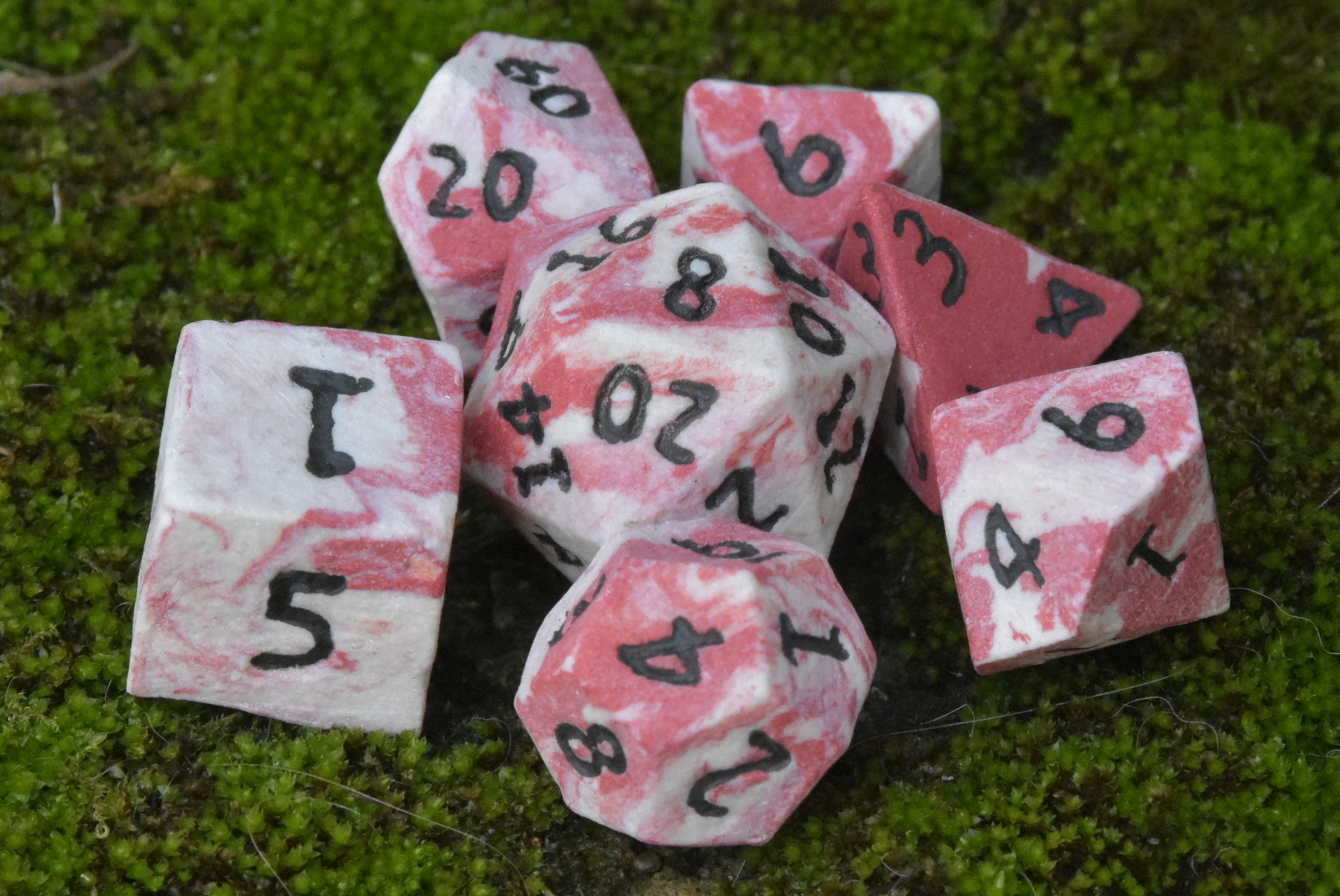
For dice, fighter players gravitate toward sets that look battle-ready — grounded, solid, nothing fragile or fussy. The Stone Wash Giant set has that heavy, weathered-stone look that suits a frontliner, and the Blood Skeleton set pulls in the fighters who like their melee a little visceral. These are dice that look like they’ve seen a few fights and won them.
Choosing Your Martial Archetype
Fighter subclasses divide into three distinct categories based on their complexity and focus. Simple powerhouses like Champion offer straightforward mechanics with expanded critical hit ranges—perfect for players who want to roll dice and deal damage without complex decision trees. Tactical specialists such as Battle Master and Cavalier provide active abilities and resource management, rewarding players who enjoy positioning, timing, and battlefield control. Hybrid warriors like Eldritch Knight and Echo Knight blend martial prowess with supernatural abilities, offering the most versatility at the cost of learning curve.
Battle Master stands as the most versatile archetype, using superiority dice to fuel powerful maneuvers like Trip Attack, Precision Attack, and Riposte. These maneuvers scale with your proficiency bonus and recharge on short rests, making Battle Master consistently impactful throughout adventuring days. Champion excels in sustained damage through improved critical hits and exceptional recovery abilities, while Eldritch Knight gains access to Shield, Misty Step, and other utility spells that dramatically improve survivability and battlefield mobility.
More specialized archetypes like Samurai excel in burst damage through Fighting Spirit, Cavalier dominates defensive play with Unwavering Mark and Hold the Line, and Echo Knight offers unparalleled tactical positioning through their manifested echo. Rune Knight provides excellent utility through giant’s might and magical runes, while Psi Warrior adds subtle battlefield control through telekinetic abilities.
Best Fighter Builds
The Great Weapon Master build focuses on maximizing damage through heavy weapons and the Great Weapon Master feat. Prioritize Strength to 20, then acquire Great Weapon Master and Polearm Master for glaives and halberds. Battle Master maneuvers like Precision Attack help offset Great Weapon Master’s accuracy penalty, while Great Weapon Fighting style maximizes damage on rerolled 1s and 2s. This build peaks around level 11-12 when Extra Attack (2) combines with feat synergies for devastating damage output.
The Sharpshooter archer prioritizes Dexterity and the Sharpshooter feat, often paired with Crossbow Expert for hand crossbow builds. Archery fighting style provides crucial accuracy bonuses to offset Sharpshooter penalties. Arcane Archer and Battle Master work exceptionally well with ranged builds, offering magical arrows or precision maneuvers respectively. Consider starting with variant human or custom lineage to grab Sharpshooter at first level.
The Sword & Board Tank maximizes Armor Class and battlefield control through shield use and defensive abilities. Cavalier and Rune Knight archetypes excel here, offering marking abilities and size increases respectively. Protection or Defense fighting styles boost defensive capabilities, while feats like Sentinel create opportunity attack chains. This build prioritizes Constitution after primary stats to maximize hit points and concentration saves for Eldritch Knights.
The Multiclass Dip involves taking 1-2 Fighter levels specifically for Action Surge, then continuing in another class. This works exceptionally well for spellcasters who can cast two leveled spells in one turn through Action Surge, or for other martial classes seeking additional fighting styles and Second Wind recovery.
Fighter Tactics & Play Tips
Action Surge timing separates good Fighters from great ones. Save Action Surge for crucial moments: finishing weakened enemies, casting two spells as an Eldritch Knight, or when you absolutely must hit with Great Weapon Master attacks. Against single powerful foes, Action Surge often provides more value than spreading attacks across multiple turns due to bounded accuracy and action economy principles.
Second Wind provides consistent healing throughout adventuring days, but timing matters. Use it when you’ve taken roughly half your hit points in damage—early enough to prevent being dropped, late enough to get maximum value. Don’t save Second Wind for emergencies; its short rest recovery makes frequent use optimal.
Fighting style selection should match your weapon and tactical preferences. Great Weapon Fighting provides consistent damage increases for two-handed weapons, Archery’s +2 bonus makes ranged builds reliable, and Defense offers universal survivability. Dueling works excellently for sword-and-board or single weapon builds, while Protection enables defensive teammate support.
Feat prioritization depends on your build archetype, but Great Weapon Master and Sharpshooter provide the largest damage increases for their respective weapon types. Polearm Master extends reach and adds bonus action attacks, while Sentinel creates sticky battlefield control through opportunity attack manipulation. Alert ensures you act early in initiative, crucial for Action Surge timing.
Best Race Pairings for a Fighter
Variant Human or Custom Lineage remains the strongest Fighter choice, providing a crucial feat at first level. Starting with Great Weapon Master, Sharpshooter, or Polearm Master immediately enables your build concept and provides significant power increases throughout early levels.
Half-Orc synergizes beautifully with critical hit builds, especially Champions. Savage Attacks doubles your weapon damage dice on critical hits, while Relentless Endurance provides emergency survivability. The Strength increase supports heavy weapon builds perfectly.
Dragonborn offers excellent attribute distribution for Fighters, with Strength increases and Constitution bonuses supporting frontline combat. The breath weapon provides area damage options that Fighters typically lack, while draconic resistance adds survivability against common damage types.
Githyanki provides medium armor proficiency and innate spellcasting that complements Eldritch Knight builds. Their martial weapon training and Strength increase create well-rounded warriors, while misty step adds excellent mobility options.
Frequently Asked Questions
Is Fighter good for new players?
Yes, Fighter is the ideal new player class due to its straightforward mechanics and forgiving nature. The d10 hit dice and heavy armor provide excellent survivability, while Second Wind offers consistent self-healing. Fighter’s multiple Ability Score Improvements allow for mistake correction through stat increases or versatile feat selection.
Champion vs Battle Master for beginners?
Champion suits players wanting simple mechanics with passive benefits like expanded critical hit ranges and enhanced healing. Battle Master rewards players ready to learn active abilities and tactical decision-making through superiority dice and maneuvers. Choose Champion for simplicity, Battle Master for engaging tactical play.
Best Fighter race?
Variant Human or Custom Lineage provide the strongest mechanical benefits through first-level feat access, enabling key build features immediately. Half-Orc excels for critical hit builds, while any race with Strength or Dexterity increases works well depending on your weapon preferences.
When to multiclass out of Fighter?
Consider multiclassing after level 5 (Extra Attack) or level 11 (Extra Attack 2), as these represent major power spikes. Many builds take 1-2 Fighter levels for Action Surge then switch classes, while others stay pure Fighter for the full Extra Attack progression and additional ASIs.
Is Echo Knight overpowered?
Echo Knight is very strong but not game-breaking, offering excellent tactical positioning and battlefield control through the manifested echo. The echo provides flanking, extended reach, and teleportation options that significantly increase tactical flexibility without overwhelming damage increases.
How many feats can a Fighter take?
Fighters receive seven Ability Score Improvements, the most of any class, allowing for extensive feat selection. Typically, you can take 4-5 feats while still maximizing your primary ability score, enabling complex build combinations and tactical flexibility.
Strength or Dexterity Fighter?
Strength Fighters excel with heavy weapons and heavy armor, maximizing damage through Great Weapon Master builds. Dexterity Fighters gain better initiative, ranged options, and improved saves, working well with finesse weapons or archery builds. Choose based on your preferred weapon style and tactical role.
Featured Ceramic Dice
Handmade ceramic dice sets from Ceramic Dice, picked to suit this class at the table.