D&D 5e Monk Guide
Monks attract the thoughtful players — the ones who read the whole subclass before committing, who care as much about the philosophy of the character as the flurry of attacks. There’s a discipline to monk players that shows up in how they play: patient, precise, waiting for the Stunning Strike that breaks the encounter open rather than spending ki on the first thing that moves. The class is famously demanding — multi-ability dependent, resource-tight — and the players who stick with it tend to enjoy that exactly. It rewards restraint.
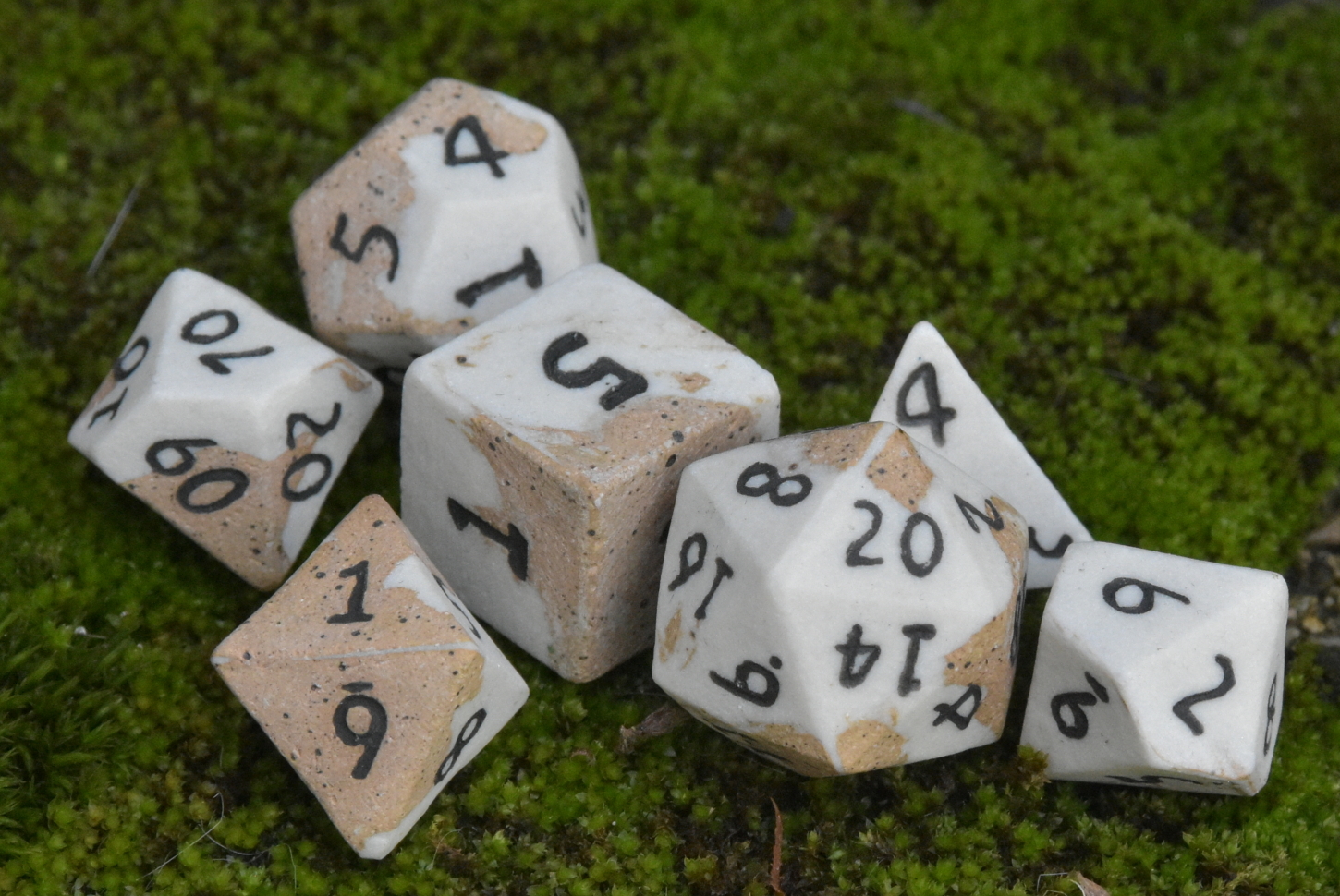
Monk players usually drift toward dice that feel calm and natural in the hand, nothing chaotic or loud. The Sandstorm set, with its weathered, meditative look, tends to be the one they pick up first, and the Mocha set gets chosen for that same quiet, grounded warmth. The dice match the discipline — steady, considered, no flash for its own sake.
Choosing Your Monastic Tradition
Monk subclasses dramatically alter your playstyle, from pure martial arts to magical utility. The strongest traditions focus on enhancing your core strengths rather than diluting them with complex mechanics.
Damage-Focused Traditions
Way of the Open Hand remains the gold standard for pure combat effectiveness. Your improved Flurry of Blows can knock enemies prone, push them away, or prevent reactions, while Wholeness of Body provides crucial healing. This tradition excels at single-target damage and battlefield control without complex resource management.
Way of the Kensei transforms you into a weapon master, extending Martial Arts to longswords and other versatile weapons. Kensei’s Shot and Deft Strike boost damage output, while Magic Kensei Weapons ensures your attacks remain relevant at higher levels. Best for players who prefer weapon combat over pure unarmed strikes.
Utility and Mobility Traditions
Way of Shadow turns you into a supernatural infiltrator with teleportation and stealth bonuses. Shadow Step provides incredible battlefield mobility, while shadow-based ki spells offer utility beyond combat. However, the tradition heavily depends on dim light or darkness to function optimally.
Way of the Astral Self projects spectral limbs that extend your reach and use Wisdom for attack rolls instead of Dexterity. This reduces the Monk’s multi-ability dependence while providing excellent crowd control through extended range. The projected limbs also grant resistance to common damage types.
Specialized Traditions
Way of Mercy offers unique healing capabilities alongside decent damage potential. Hand of Harm and Hand of Healing make you a versatile party member, though ki point costs can strain your limited resources. Excellent for smaller parties lacking dedicated healing.
Way of the Drunken Master maximizes mobility through Tipsy Sway and bonus action Disengage after Flurry of Blows. While thematically fun, the mechanical benefits often prove less impactful than other traditions’ direct damage or utility improvements.
Best Monk Builds
The Open Hand DPS
Focus on Dexterity first, then Wisdom for higher save DCs. Take Mobile feat early to enhance hit-and-run tactics, followed by Fey Touched for Misty Step. Prioritize Stunning Strike against single powerful enemies, using Flurry of Blows’ knockdown effect to create advantage for allies. This build peaks in mid-tier play when Stunning Strike becomes reliable.
The Shadow Infiltrator
Maximize Dexterity for stealth and damage, with Wisdom as secondary priority. Alert feat ensures you act first in combat, while Elven Accuracy (if eligible) capitalizes on advantage from hiding. Focus on battlefield positioning, using Shadow Step to appear behind enemies or escape dangerous situations. Works best in campaigns with frequent stealth opportunities.
The Stunning Specialist
Emphasize Wisdom over Dexterity to maximize Stunning Strike save DCs. Sentinel feat locks down stunned enemies, while Magic Initiate can provide utility cantrips. Save ki points specifically for stunning high-priority targets like spellcasters. This build sacrifices some damage for exceptional battlefield control.
The Astral Warrior
Prioritize Wisdom as your attack stat, making Dexterity secondary for AC and initiative. Crusher feat enhances positioning with your extended reach, while Telekinetic provides bonus action battlefield manipulation. Use your 10-foot reach to stay safe while maintaining consistent damage output.
Monk Tactics & Play Tips
Effective Monk play revolves around ki point economy and target prioritization. Never spend ki freely in early encounters—save resources for challenging fights where Stunning Strike can neutralize key enemies.
Stunning Strike Priorities
Target spellcasters and flying enemies first, as they benefit most from being stunned. Creatures with legendary resistance require patience—burn through their resistances with multiple attempts rather than switching targets. Against groups, stunning one enemy while focusing damage on another maximizes action economy disruption.
Ki Point Budgeting
Reserve at least 2-3 ki points for defensive options like Patient Defense or Step of the Wind. In tier 2 play (levels 5-10), plan for 2-3 Stunning Strike attempts per encounter. Higher-level play allows more aggressive spending, but always maintain emergency reserves for escape options.
Positioning and Movement
Use your superior speed to engage backline enemies while avoiding opportunity attacks. Step of the Wind provides both Dash and Disengage, making it invaluable for hit-and-run tactics. Against ranged enemies, close distance quickly rather than absorbing projectile damage unnecessarily.
Patient Defense becomes crucial against multiple attackers or when low on hit points. The disadvantage on incoming attacks often proves more valuable than an extra attack, especially when ki points are limited.
Best Race Pairings for a Monk
Variant Human or Custom Lineage
Early feat access transforms Monk effectiveness dramatically. Mobile feat eliminates opportunity attacks after attacking, while Alert ensures first-round positioning advantages. The flexibility to choose your optimal feat immediately makes these races universally strong for any Monk build.
Wood Elf
Dexterity and Wisdom bonuses align perfectly with Monk needs, while Fey Ancestry protects against charm effects. Elven Accuracy feat eligibility with Tasha’s rules provides exceptional damage potential when combined with advantage-generating abilities like hiding or flanking.
Tortle
Natural armor eliminates Dexterity dependency for AC, allowing immediate Wisdom focus for better saves and ki abilities. The Strength bonus helps with Athletics checks for grappling, while Shell Defense provides emergency damage reduction when surrounded.
Harengon
Proficiency bonus to initiative ensures early action economy, while Rabbit Hop provides bonus action positioning without ki cost. Lucky Footwork adds reaction-based damage reduction, complementing the Monk’s existing defensive abilities perfectly.
Frequently Asked Questions
Is Monk good for new players?
Monk offers moderate complexity with clear decision points, making it suitable for newer players willing to learn resource management. The class rewards tactical thinking over complex mechanics, though ki point budgeting requires practice to master effectively.
What’s the best Monk subclass?
Way of the Open Hand provides the most reliable performance across all campaign types and levels. It enhances your core abilities without adding complexity, making it ideal for most players and situations.
Why is Monk MAD (Multi-Ability Dependent)?
Monks need Dexterity for attack rolls, damage, and AC, plus Wisdom for ki save DCs and Perception. Constitution remains important for survivability, creating competition for limited ability score increases compared to classes focusing on single primary abilities.
When does Monk get good?
Monks feel strongest at levels 5-11 when Stunning Strike becomes reliable but enemies lack legendary resistance. Early levels (1-4) can feel underwhelming due to limited ki points, while very high levels favor spellcasters over martial classes generally.
What’s the best Monk race?
Variant Human or Custom Lineage typically provide the most immediate impact through early feat access. Wood Elf offers the best long-term stat distribution, while Tortle eliminates MAD issues by providing natural armor.
Should I take the Mobile feat?
Mobile synergizes excellently with Monk mobility, eliminating opportunity attacks and increasing speed further. It’s particularly valuable for Open Hand and Shadow monks who rely on hit-and-run tactics, though other feats may provide more direct combat benefits.
What are good Monk multiclass options?
Ranger (2-3 levels) provides Fighting Style and spells while maintaining Wisdom synergy. Rogue offers expertise and Sneak Attack damage for Dexterity-focused builds, though ki point progression delays hurt significantly at most tables.
Featured Ceramic Dice
Handmade ceramic dice sets from Ceramic Dice, picked to suit this class at the table.