D&D 5e Rogue Guide
Rogue players are the ones already thinking three steps ahead — where the exits are, who’s carrying the key, how to get Sneak Attack online this turn. There’s a cleverness to the type; they enjoy the angle nobody else spotted. The class rewards positioning and patience over raw power, and good rogue players love that they win fights by being smarter, not louder. Cunning Action, the disengage-and-vanish, the perfectly-timed crit from the shadows — it’s a class built on getting away with it.
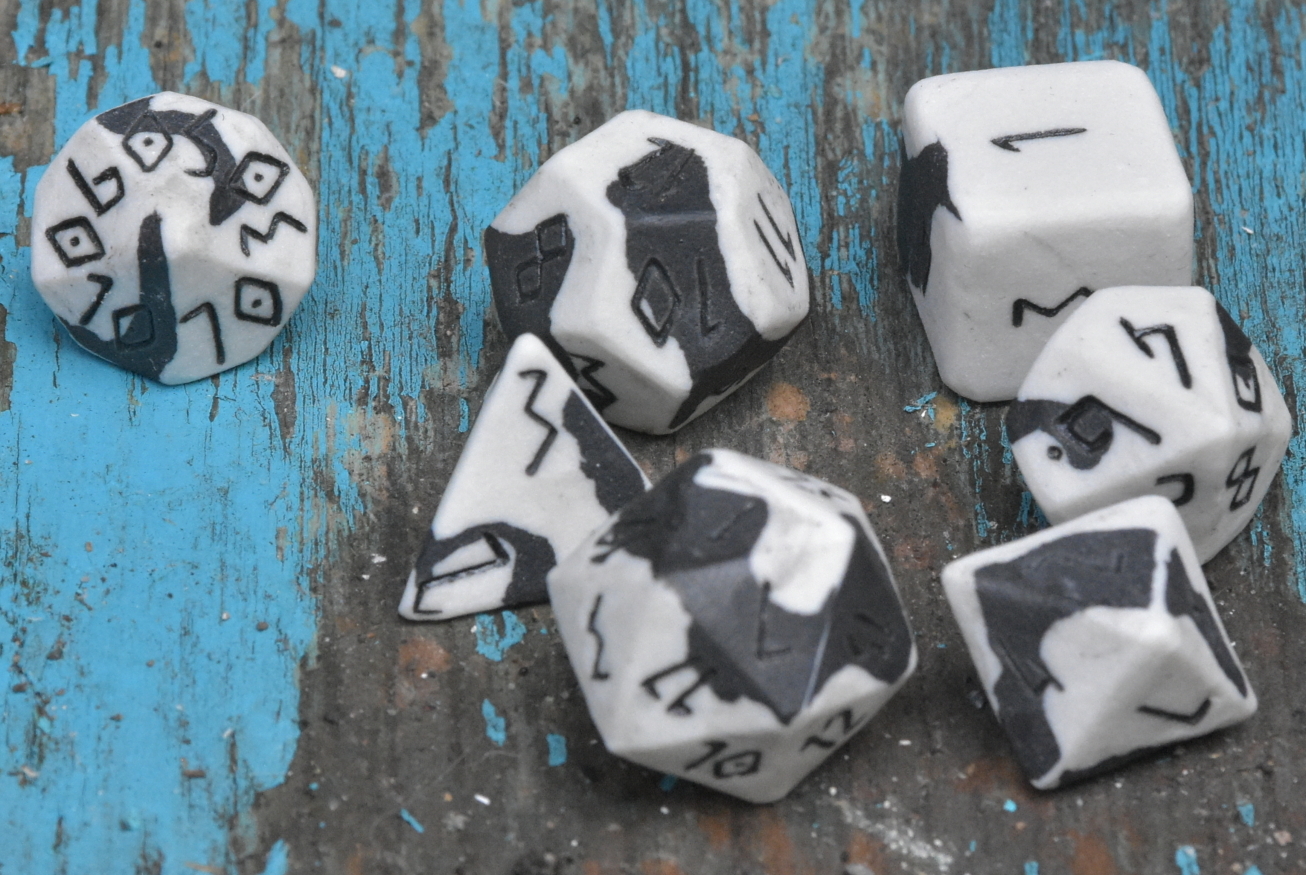
For dice, rogue players gravitate toward sets that are dark, sharp, a little dangerous-looking. The Dark Heart set has exactly that shadowed edge, and the Runic Assassin’s Ghost set leans right into the cloak-and-dagger fantasy. Dice that look like they’re up to something.
Choosing Your Roguish Archetype
Rogues express their cunning through distinct Roguish Archetypes that fundamentally change how you approach combat and exploration. Your choice determines whether you’re a spell-weaving trickster, a social manipulator, or a deadly assassin.
Combat-Focused Archetypes: The Assassin excels at first-round burst damage with automatic critical hits against surprised enemies, making them devastating in ambush scenarios but situational otherwise. Swashbucklers shine as solo strikers who can trigger Sneak Attack without allies nearby, using Fancy Footwork to avoid opportunity attacks. Soulknives create psychic blades from thin air, never needing weapons and dealing solid consistent damage.
Utility and Magic: Arcane Tricksters blend roguish skills with wizard spellcasting, gaining Find Familiar for reliable advantage and utility spells for creative problem-solving. They’re complex but incredibly versatile. Phantom Rogues manipulate souls and death magic, dealing necrotic damage to multiple enemies and communing with the dead.
Skill and Social Specialists: Masterminds excel in social encounters with enhanced Help actions and manipulation abilities, perfect for intrigue campaigns. Inquisitives become supernatural detectives with enhanced Insight and Investigation, excelling at uncovering secrets. Scouts gain ranger-like mobility and survival skills, functioning as skirmishers and explorers.
Simple but Effective: Thieves represent the classic burglar archetype with Fast Hands for bonus action item use and enhanced climbing abilities through Second-Story Work. They’re straightforward but highly effective at traditional rogue activities.
Best Rogue Builds
Swashbuckler Solo Striker: Prioritize Dexterity first, then Charisma for Panache abilities. Take the Dueling fighting style if you multiclass Fighter, or focus on rapier and dagger combat. Fencing Master feat enhances your dueling capabilities, while Mobile increases your hit-and-run tactics. This build excels at dancing around enemies without needing allies for Sneak Attack.
Assassin Burst Specialist: Maximum Dexterity with Constitution secondary for survivability. Sharpshooter feat dramatically increases your surprise round damage output, while Alert ensures you act first in combat. Consider a Fighter dip for Action Surge to unleash devastating opening volleys. This build lives or dies by surprise rounds and initiative order.
Arcane Trickster Caster-Rogue: Dexterity remains primary, but Intelligence becomes crucial for spell save DC and spell attack bonuses. Find Familiar provides consistent advantage for Sneak Attack, while Shield spell dramatically improves survivability. War Caster feat allows spellcasting while wielding weapons, and Fey Touched grants Misty Step for positioning. Balance spell slots between utility and combat effectiveness.
Soulknife Anywhere-Rogue: Pure Dexterity focus with Wisdom secondary for enhanced Psi-Bolstered Knack abilities. Telekinetic feat synergizes perfectly with your psychic theme while providing bonus action positioning. This build works anywhere since you never need weapons, making it perfect for infiltration missions and varied environments.
Rogue Tactics & Play Tips
Sneak Attack triggers when you have advantage on your attack roll OR when an ally is within 5 feet of your target (and you don’t have disadvantage). Understanding this dual condition is crucial – you don’t need to be hidden, just meet one of these requirements. Position yourself strategically to ensure consistent Sneak Attack damage.
Cunning Action defines rogue mobility and safety. Use Disengage as a bonus action to retreat safely after attacking, preventing opportunity attacks. Dash extends your movement for better positioning or escaping dangerous situations. Hide attempts can grant advantage for next turn’s attack, but require appropriate cover or concealment.
Manage your action economy carefully. Your bonus action often determines your survival – choose between Cunning Action for safety, off-hand attacks for damage, or subclass features. Don’t forget you can trigger Sneak Attack on opportunity attacks or other reactions, potentially doubling your damage output per round.
Expertise doubles your proficiency bonus on chosen skills, making you exceptionally capable in your specialties. Choose skills that complement your party’s needs and your character’s role. Stealth and Perception are common choices, but don’t overlook Investigation, Insight, or social skills depending on your campaign.
Positioning is everything. Stay at range when possible, use cover effectively, and always plan your escape route. Uncanny Dodge halves damage from one attack per round, but you’re still fragile. Your high AC comes from Dexterity and light armor, not heavy protection.
Best Race Pairings for a Rogue
Variant Human/Custom Lineage: The free feat at first level provides incredible versatility. Sharpshooter, Crossbow Expert, or Fey Touched can define your entire build from the beginning. The flexibility makes this pairing universally strong for any rogue archetype.
Half-Elf: Two free skill proficiencies stack beautifully with rogue skill selection, while Charisma bonuses benefit Swashbucklers and social rogues. The versatility in ability score increases accommodates different build priorities, and Fey Ancestry provides useful mental protection.
Tabaxi: Feline Agility doubles your speed once per turn, creating incredible hit-and-run potential. Natural climbing speed and enhanced Perception complement traditional rogue activities. The doubled movement synergizes perfectly with Cunning Action for unmatched battlefield mobility.
Goblin: Fury of the Small adds significant damage to your biggest attacks, effectively extending Sneak Attack damage. Nimble Escape provides redundant but useful Cunning Action options, while small size aids stealth and infiltration. The Dexterity increase perfectly matches rogue priorities.
Frequently Asked Questions
What’s the best Rogue subclass?
Arcane Trickster offers the most versatility with spellcasting and utility, while Swashbuckler provides the most consistent combat performance. Assassin excels in specific scenarios but can feel underwhelming in prolonged combat. Choose based on your campaign style and preferred playstyle rather than pure optimization.
How does Sneak Attack actually work?
Sneak Attack triggers when you attack with advantage OR when an ally is within 5 feet of your target (and you lack disadvantage). You must use a finesse or ranged weapon, and it only applies once per turn, not once per round. This means you can potentially Sneak Attack on opportunity attacks or other reactions.
What’s the best Rogue race?
Variant Human and Custom Lineage provide the most flexibility with a free feat at first level. Half-Elf offers excellent skill synergy and social benefits, while Tabaxi provides unmatched mobility. The “best” race depends on your specific subclass and campaign focus.
Rogue vs Ranger – which is better?
Rogues excel at consistent single-target damage and skills, while Rangers provide more versatility with spellcasting and multiple attacks. Rogues are simpler to play and more reliable in their specialty, whereas Rangers offer more tactical options but require more system mastery to optimize effectively.
Is Assassin a good subclass or a trap option?
Assassin is highly campaign-dependent rather than universally good or bad. In intrigue-heavy campaigns with frequent ambush opportunities, they’re devastating, but in dungeon crawls with alert enemies, their features rarely trigger meaningfully. Discuss with your DM about surprise encounter frequency before choosing.
Should I take Crossbow Expert as a Rogue?
Crossbow Expert is excellent for ranged rogues, eliminating loading restrictions and providing bonus action attacks for more Sneak Attack opportunities. However, it competes with Cunning Action for your bonus action, so evaluate whether the extra attack chance outweighs mobility and safety options in your specific campaign.
Is Rogue good for new players?
Rogues are moderately beginner-friendly with straightforward combat mechanics but require tactical thinking for optimal play. The abundance of skills makes them versatile problem-solvers, though managing Cunning Action timing and positioning takes practice. They’re easier than full spellcasters but more complex than fighters.
Featured Ceramic Dice
Handmade ceramic dice sets from Ceramic Dice, picked to suit this class at the table.