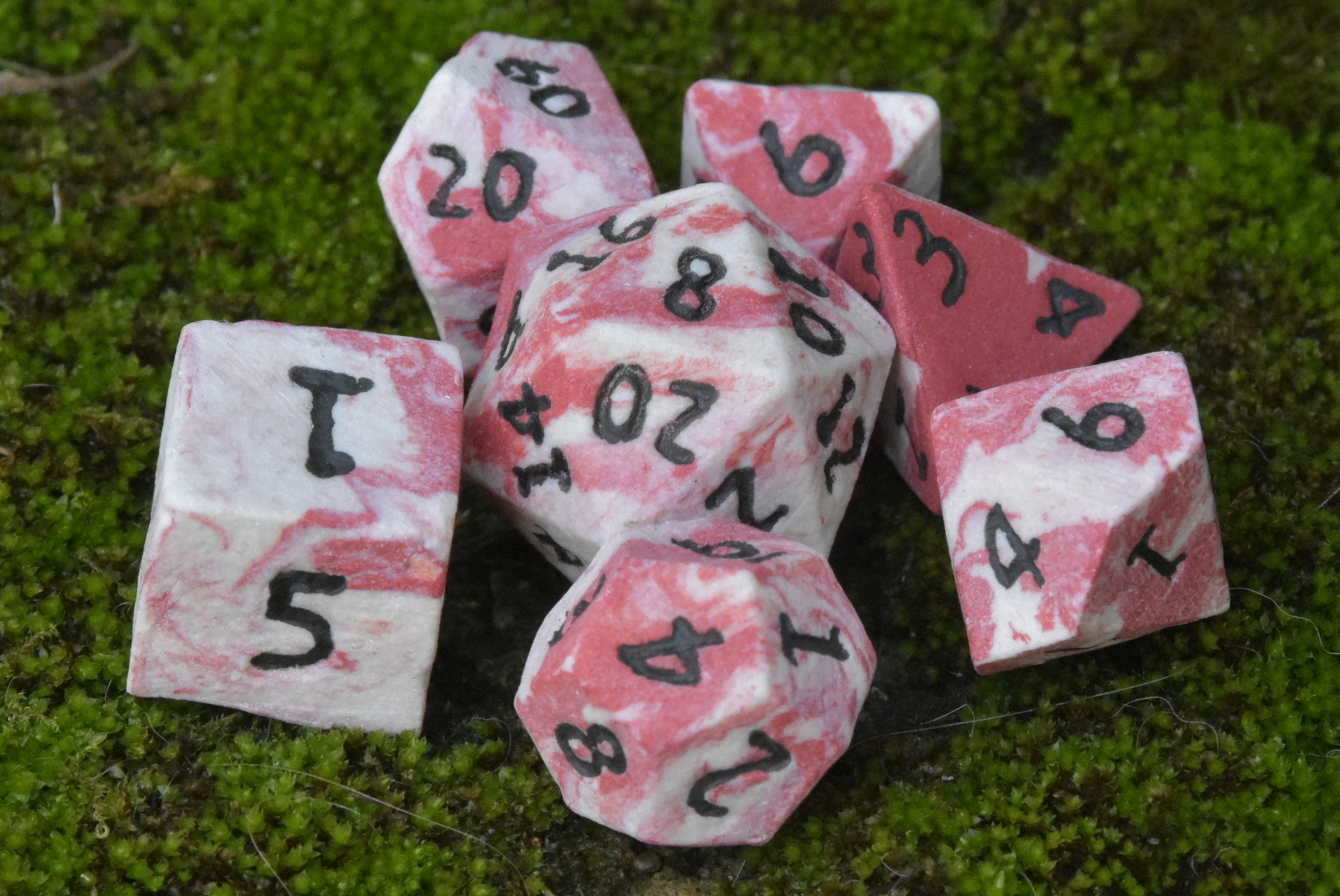
Ceramic Dice vs Other Materials: An Honest Comparison
Choosing dice materials for tabletop gaming goes beyond simple aesthetics. Each material fundamentally changes how dice feel in your hand, sound on the table, and perform over years of play. This guide examines ceramic dice against metal, resin, acrylic, and gemstone options through practical testing and real gaming experience.
Ceramic vs Metal Dice
The most common comparison players make is between ceramic and metal dice, as both offer substantial weight and durability compared to standard plastic sets. However, these materials diverge significantly in practical use.
Weight and Balance
Metal dice typically weigh 120-180 grams per seven-piece set, while ceramic sets average 85-110 grams. This makes ceramic dice heavier than plastic but noticeably lighter than metal. The weight distribution differs too – metal dice often use hollow construction or weight-reducing designs to prevent table damage, while ceramic dice maintain solid construction throughout.
Balance testing reveals metal dice sometimes suffer from air bubbles or uneven material distribution during casting. Ceramic dice fired at proper temperatures (2200°F+) show more consistent density. However, poorly fired ceramics can develop internal microfractures that affect rolling.
Sound and Table Impact
Metal dice produce a distinctive ring when rolled, particularly on hard surfaces. This metallic chime can enhance the gaming atmosphere but becomes disruptive in quiet environments or during online play. Ceramic dice create a softer “click” – louder than plastic but less piercing than metal.
Table damage represents a genuine concern with metal dice. Even with felt-lined dice trays, heavy metal d20s can dent softer wood surfaces over time. Ceramic dice, while still requiring care, distribute impact force differently due to their lower weight and different material properties.
Durability Comparison
Both materials resist scratching and maintain their finish well. Metal dice, particularly those from Norse Foundry with their aircraft-grade aluminum construction, handle drops onto hard floors better than ceramic. A metal die might dent; a ceramic die could chip or crack.
However, ceramic dice excel in chemical resistance. Metal dice can tarnish, develop patina, or react to skin oils over time. Copper and brass sets require regular polishing. Ceramic dice remain chemically inert – the same set looks identical after five years of regular play.
Aesthetic Options
Metal dice shine through anodizing, electroplating, and mechanical finishing techniques. Rainbow titanium coatings, brushed steel textures, and mirror polishes create striking visual effects impossible with ceramic.
Ceramic dice counter with glaze variety and pattern complexity. Crystalline glazes produce organic patterns unique to each die. Raku firing techniques create metallic sheens without actual metal content. Hand-painted underglazes allow detailed artwork that won’t wear off like metal paint fills.
Ceramic vs Resin Dice
Resin dice occupy the middle ground between mass-produced acrylic and artisan materials like ceramic. Understanding their differences helps identify when each material serves players best.
Manufacturing and Customization
Resin dice excel at capturing internal elements – flowers, glitter, liquid cores, and miniature objects suspended within clear or translucent material. This three-dimensional depth remains impossible with ceramic construction. Small makers on Etsy produce remarkable resin sets with embedded LED lights, moving parts, or photosensitive color-changing pigments.
Ceramic customization happens through surface treatments. Glazing techniques, carved textures, and inlay work define ceramic dice aesthetics. Ceramic Dice Ceramics demonstrates this with hand-carved designs that would distort if attempted in resin molds.
Environmental Factors
Resin dice face environmental vulnerabilities ceramic dice ignore. UV exposure yellows clear resins over time. Temperature extremes cause expansion and contraction that can crack resin dice or separate layered pours. Ceramic dice fired properly remain stable across all normal gaming conditions.
The manufacturing process also differs environmentally. Resin casting releases VOCs requiring ventilation and protective equipment. Ceramic production uses natural clay materials and electric kilns producing minimal emissions.
Feel and Rolling Characteristics
Resin dice weight varies dramatically based on inclusions and density. Hollow resin dice with liquid cores weigh less than solid ceramic. Dense resin with metal powder inclusions can match ceramic weight but with different balance points.
Surface texture provides another distinction. Resin dice typically feature high-gloss finishes from polishing. Ceramic dice offer matte, satin, or glossy finishes depending on glaze choice and firing temperature. This affects grip during shaking and release characteristics when rolling.
Longevity and Wear
Quality resin dice from established makers last years with proper care. However, budget resin sets often use softer formulations that scratch easily. Numbers filled with paint rather than different-colored resin wear away through use.
Ceramic dice numbers, whether carved and glazed or created through mishima technique, become permanent parts of the die structure. The material hardness (6-7 on the Mohs scale for properly fired stoneware) resists scratching from typical gaming use.
Ceramic vs Acrylic Dice
Acrylic dice dominate the gaming market through low cost and consistent manufacturing. Comparing them to ceramic dice highlights when spending more on dice materials makes sense.
Manufacturing Scale and Consistency
Acrylic dice benefit from injection molding efficiency. Companies like DnD Dice produce thousands of identical sets daily. This manufacturing scale enables $7-15 price points for complete polyhedral sets.
Ceramic dice require individual attention through forming, drying, bisque firing, glazing, and glaze firing stages. Even slip-cast ceramic dice need hand-finishing. This process creates subtle variations between dice that some players consider character flaws while others view as artisan charm.
Weight and Game Feel
Standard acrylic dice weigh 10-15 grams per set – roughly one-seventh the weight of ceramic sets. This dramatic difference affects every aspect of play. Light dice require less effort to shake but can feel insubstantial. They bounce more on hard surfaces and blow around easily on outdoor gaming tables.
The weight difference becomes most noticeable during extended sessions. Players rolling frequently (spellcasters making multiple attack rolls) might prefer lighter acrylic to reduce hand fatigue. Players who savor each roll often prefer ceramic dice weight as more ceremonial.
Color and Transparency Options
Acrylic excels at transparent and translucent effects. Layered colors, embedded glitters, and gradient transitions happen easily in acrylic manufacturing. Clear dice with suspended numerals or internal wisps create effects impossible in opaque ceramic.
Ceramic dice respond with surface complexity acrylic cannot match. Reduction firing produces metallic sheens. Salt firing creates organic orange-peel textures. Wood firing leaves ash deposits forming natural patterns. These techniques produce one-of-a-kind results rather than reproducible effects.
Break and Chip Resistance
Acrylic dice bounce when dropped. They might scuff or develop small cracks from extreme impacts but rarely shatter. This resilience makes them ideal for gaming with children or in environments where dice frequently fall.
Ceramic dice require more careful handling. A ceramic d4 dropped point-first onto tile can chip. However, ceramic hardness means normal tabletop use won’t wear edges or corners like softer acrylics show after years of play.
Ceramic vs Gemstone Dice
Gemstone dice represent the pinnacle of natural material dice. Comparing them to ceramic reveals interesting parallels and crucial differences for collectors and players.
Material Sourcing and Ethics
Gemstone dice raise sourcing questions ceramic dice avoid. Genuine turquoise, lapis lazuli, or jade requires mining with associated environmental and labor concerns. Synthetic gemstones offer alternatives but lose the authentic mineral appeal many buyers seek.
Ceramic dice use refined clay materials available worldwide. Local sourcing remains possible – many ceramic dice makers use regional clay bodies. This eliminates shipping raw materials globally and supports transparency in production.
Natural Variation vs Controlled Aesthetics
Every gemstone die shows unique mineral patterns, inclusions, and color variations. An amethyst set might range from pale lavender to deep purple within the same seven dice. This natural variation appeals to collectors but frustrates players seeking matched sets.
Ceramic glazing allows controlled variation. A crystalline glaze produces different patterns on each die while maintaining consistent base colors. Potters can increase or decrease variation through glaze thickness, cooling rates, and chemical adjustments.
Practical Gaming Considerations
Gemstone density varies dramatically by mineral type. Hematite dice weigh over 200 grams per set; howlite sets weigh less than ceramic. This inconsistency makes building mixed-material collections challenging – different dice feel unbalanced when used together.
Most gemstone dice require special care. Selenite dissolves in water. Fluorite scratches easily. Pyrite can develop sulfur smell when handled frequently. Ceramic dice need basic care – avoid dropping them and they last indefinitely.
Price and Value Propositions
Gemstone dice command premium prices. Labradorite sets from Norse Foundry exceed $100. Rare materials like meteorite or dinosaur bone push prices higher. These become display pieces rather than regular gaming tools.
Ceramic dice occupy a middle price tier. Handmade sets from artists like those at Ceramic Dice Ceramics range $40-80. This pricing reflects craftsmanship hours while remaining accessible for regular play. Machine-made ceramic dice could theoretically match acrylic prices but rarely appear in Western markets.
Material Comparison Table
| Material | Weight (7-die set) | Sound Level | Durability | Price Range | Maintenance Needs |
|---|---|---|---|---|---|
| Ceramic | 85-110g | Medium click | High (chips possible) | $40-80 | Minimal – avoid drops |
| Metal | 120-180g | Loud ring | Very high | $25-70 | Polish some metals |
| Resin | 15-60g | Soft click | Medium | $20-60 | Avoid UV, heat |
| Acrylic | 10-15g | Light clatter | Medium-high | $7-25 | None |
| Gemstone | 40-200g+ | Hard click | Varies by stone | $50-200+ | Stone-specific care |
When to Choose Each Dice Material
Understanding when each material excels helps players build collections that enhance their gaming experience rather than simply accumulating dice.
Choose Ceramic Dice When:
Ceramic dice work best for players valuing artisan craftsmanship and unique aesthetics. The medium weight provides satisfying rolls without metal’s table damage risk. Players who appreciate handmade items and support small makers find ceramic dice align with these values.
Home games benefit most from ceramic dice. The sound level works in residential settings without disturbing others. The weight feels special for important rolls – death saves, final boss attacks, or character generation stats.
Collectors seeking one-of-a-kind pieces gravitate toward ceramic. Raku firing, custom glazes, and hand-carved designs ensure no two sets match exactly. This uniqueness extends to commissioned pieces where potters can incorporate personal symbols or color preferences.
Choose Metal Dice When:
Metal dice suit players prioritizing durability above all else. Convention gaming, outdoor sessions, and travel gaming benefit from metal’s resistance to damage. The weight makes a statement – pulling out metal dice signals serious gaming intent.
Dice pools requiring many dice favor metal’s durability. Games like Shadowrun or World of Darkness where players roll 10+ dice regularly would quickly wear softer materials. Metal maintains sharp edges and clear numbers through thousands of rolls.
Skullsplitter Dice offers metal sets with softer aluminum options reducing weight while maintaining metal aesthetics. These compromise options work for players wanting metal appearance without extreme weight.
Choose Resin Dice When:
Resin excels for themed dice matching character concepts. A sea druid player might want dice with suspended seashells and blue-green swirls. Fire genasi characters pair with resin dice containing red glitter and gold leaf. These specific aesthetic matches happen easily in resin.
Budget-conscious players building multiple sets benefit from resin’s middle-ground pricing. Quality resin dice cost more than basic acrylic but less than most ceramic or metal options. This allows collecting different sets for different characters without overspending.
Online play favors resin’s moderate sound levels. Lighter than ceramic or metal, resin dice work better with sensitive microphones during virtual tabletop sessions.
Choose Acrylic Dice When:
New players should start with acrylic dice. The low cost allows trying tabletop RPGs without significant investment. If gaming becomes a regular hobby, upgrading to premium materials makes sense later.
Game masters running for multiple players benefit from bulk acrylic purchases. Lending dice to new players, replacing lost dice, and maintaining table sets becomes economical with acrylic. The consistency helps avoid arguments about “lucky” or “cursed” dice affecting outcomes.
Tournament play often requires transparent dice to prevent weighted or loaded dice cheating. Acrylic provides affordable transparent options in every color imaginable.
Choose Gemstone Dice When:
Gemstone dice serve collectors and display purposes primarily. The natural beauty and mineral properties create conversation pieces beyond gaming tools. Metaphysical practitioners might choose stones for supposed energy properties – amethyst for intuition, tiger’s eye for courage.
Special occasions warrant gemstone dice. Anniversary gifts, lifetime campaign completion rewards, or memorial sets for departed players carry meaning enhanced by permanent natural materials.
Some players match gemstone dice to character themes deeply. An earth elemental sorcerer with jasper dice or a noble paladin with lapis lazuli creates material storytelling extending beyond verbal roleplay.
Frequently Asked Questions
Do ceramic dice roll fairly compared to other materials?
Properly made ceramic dice roll as fairly as any other material. The key lies in consistent density throughout each die, achieved through proper clay preparation and firing temperatures. Ceramic dice actually avoid some fairness issues found in other materials – they don’t have air bubbles like cast metal dice or potential weight distribution problems from inclusions in resin dice. However, handmade ceramic dice may show slight variations that affect rolling, though these rarely impact game outcomes meaningfully.
Will ceramic dice damage my gaming table?
Ceramic dice can mark softer wood surfaces if rolled aggressively, but they cause less damage than metal dice of similar size. The lighter weight (compared to metal) reduces impact force, while the smooth glazed surface prevents the sharp edge damage possible with some gemstone dice. Using a dice tray remains recommended for any dice heavier than standard acrylic, but ceramic dice don’t require the thick padded trays that metal dice need.
How do I clean and maintain ceramic dice?
Ceramic dice need minimal maintenance compared to other premium materials. Wipe them with a damp cloth to remove finger oils or dirt. Unlike metal dice, they won’t tarnish or require polishing. Unlike resin, they won’t yellow or cloud with age. Avoid ultrasonic cleaners which can exploit microscopic flaws in the glaze. Store ceramic dice in soft bags or padded compartments to prevent chips from dice clicking together during transport.
Why are ceramic dice more expensive than acrylic but cheaper than many gemstone dice?
Ceramic dice pricing reflects the handmade production process – each die requires forming, drying, bisque firing, glazing, and glaze firing. This takes days compared to minutes for injection-molded acrylic. However, ceramic materials (clay and glaze) cost far less than genuine gemstones, and the process remains faster than cutting and polishing stone dice. The price point represents a balance between craftsmanship time and material costs.
Can ceramic dice break if dropped?
Ceramic dice can chip or crack if dropped onto hard surfaces like concrete or tile, especially if they land on a corner or edge. They’re more fragile than metal or acrylic dice but tougher than most people expect – a fall onto carpet or from table height onto wood floors rarely causes damage. The risk increases with larger dice (d20s and d12s) due to greater mass. This fragility is the main tradeoff for ceramic’s other benefits.
Are ceramic dice worth it for casual players?
Ceramic dice make sense for casual players who value the tactile experience of rolling dice and appreciate handmade items. If you play monthly and want each session to feel special, a single set of ceramic dice enhances that experience. However, if you play rarely or view dice purely as random number generators, acrylic dice provide better value. Consider ceramic dice an investment in gaming enjoyment rather than gaming necessity.
Featured Ceramic Dice
Handmade ceramic dice sets from Ceramic Dice, picked to suit this class at the table.