D&D 5e Sorcerer Guide
Sorcerers don’t learn magic the way wizards do — they are the magic, and the players who pick them tend to feel the same way about their dice. There’s a flair to a sorcerer player: they want the spell that lands big, the Twinned fireball, the moment everyone at the table leans in. We’ve always thought sorcerer is the class that rewards confidence — the willingness to spend your sorcery points now and figure out the rest later. Metamagic is where they live, bending spells into shapes the rules didn’t quite expect.
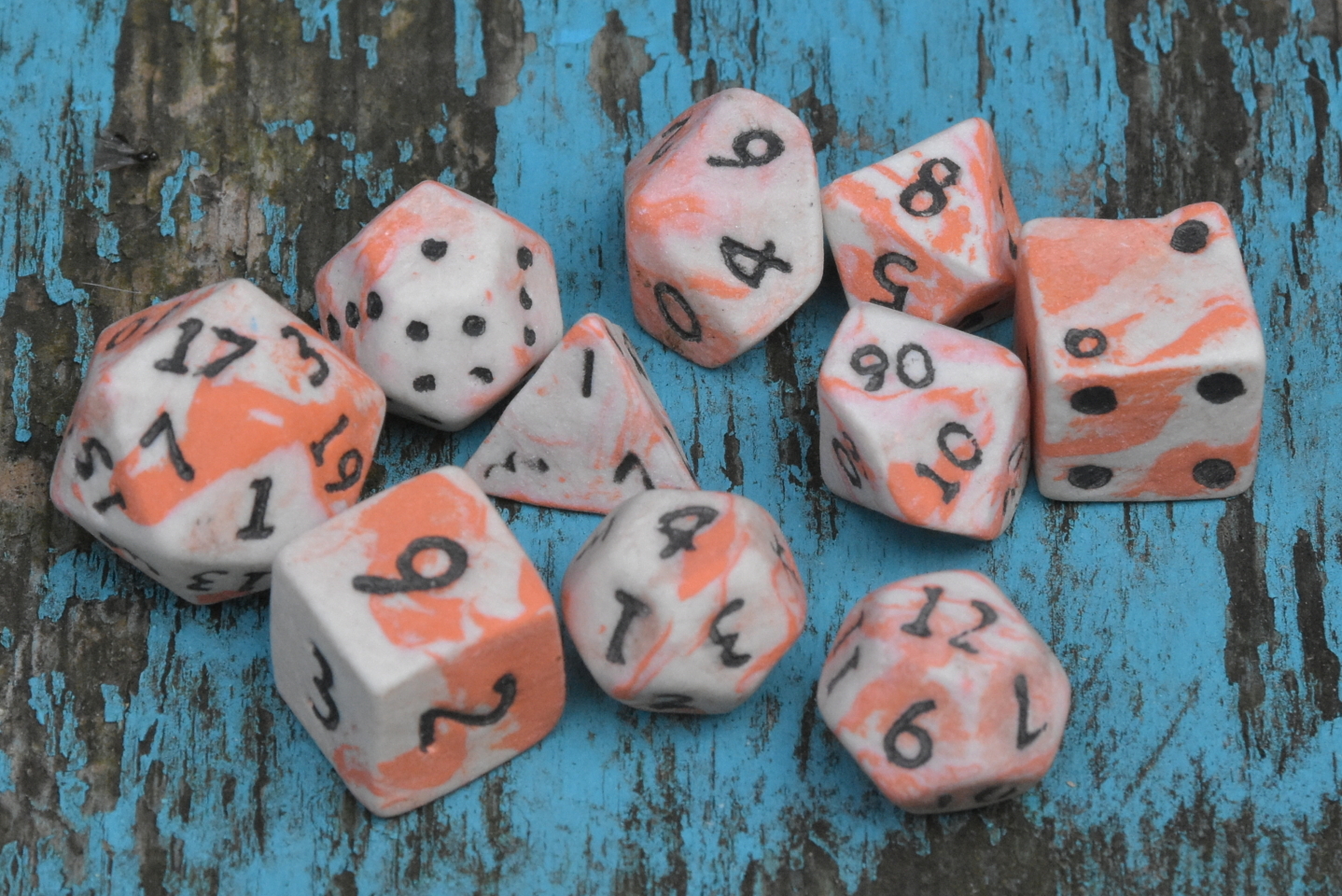
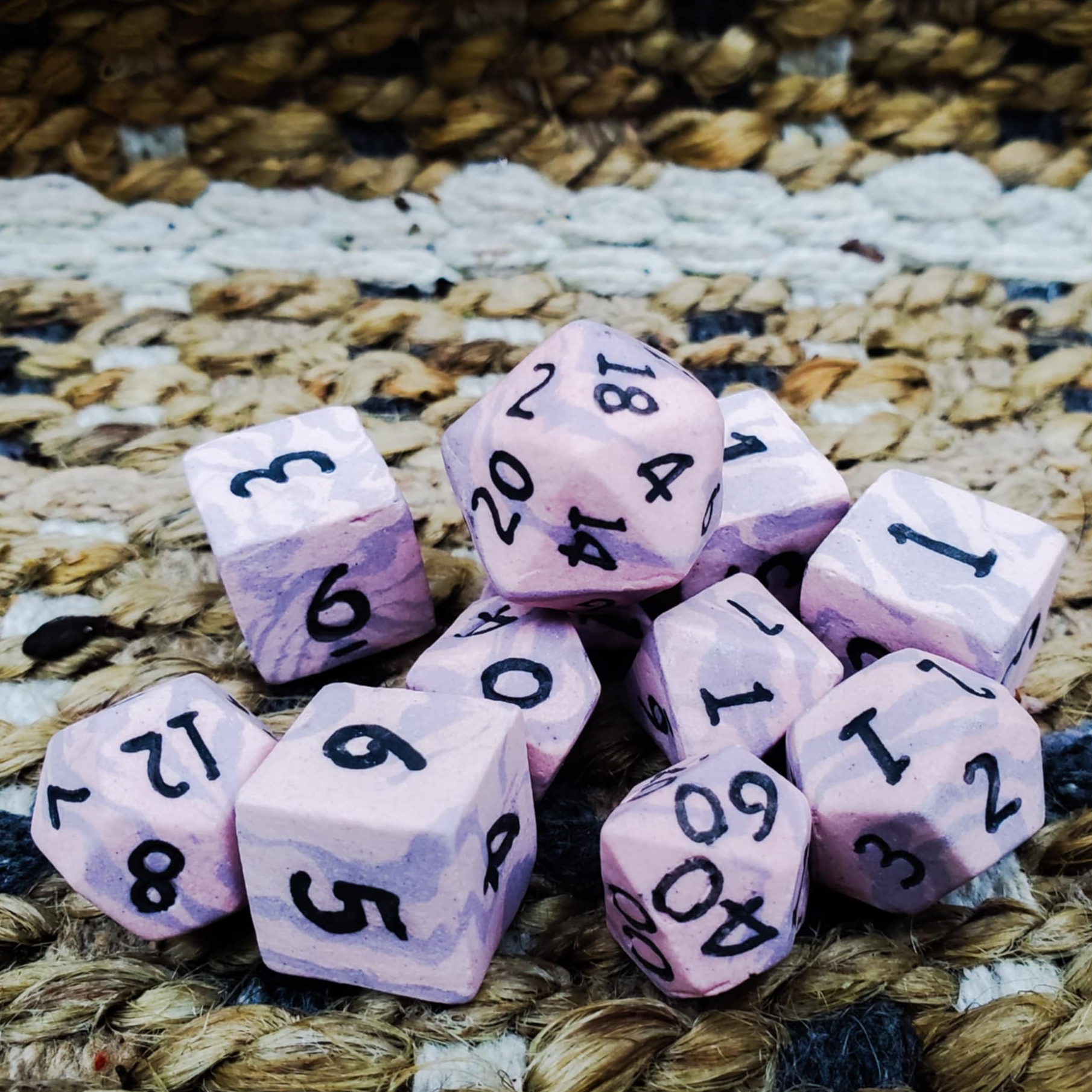
For dice, sorcerer players reach for sets with movement and color in them — something that looks like raw magic caught mid-swirl rather than something quiet and reserved. The Dreamsicle set tends to catch their eye for exactly that reason, and the Fireball set is almost too on-the-nose for a sorcerer who lives for that one spell. A good sorcerer set should look like it might go off.
Choosing Your Sorcerous Origin
Your Sorcerous Origin defines both your magical source and tactical approach. Each origin offers unique abilities that complement different playstyles, from raw damage dealing to versatile support casting.
For New Players: Draconic Bloodline provides extra hit points and straightforward damage bonuses, making it the most forgiving option. Divine Soul offers incredible spell versatility by adding the entire Cleric list to your options.
For Damage Dealers: Draconic Bloodline excels with elemental affinity bonuses and increased survivability. Storm Sorcery provides excellent mobility for hit-and-run tactics, while Aberrant Mind offers psychic damage and telepathic utility.
For Controllers: Clockwork Soul grants access to protective abjuration and transmutation spells normally unavailable to Sorcerers. Shadow Magic provides excellent crowd control with darkness effects and a safety net against death.
For Chaos Enthusiasts: Wild Magic creates unpredictable battlefield effects that can benefit or hinder your party. While mechanically weaker than other origins, it provides unmatched entertainment value for players who enjoy unpredictability.
Best Sorcerer Builds
Twin Fireball Nuker
This classic build maximizes damage output by using Twinned Spell metamagic to target two creatures with single-target spells. Prioritize Charisma, then Constitution for survivability. Essential metamagic options include Twinned Spell, Quickened Spell, and Heightened Spell. Key spells are Fireball, Polymorph, and Hold Person. Consider the Elemental Adept feat to bypass resistances.
Subtle Caster
Built around Subtle Spell metamagic, this build excels in social situations and against enemy casters. Subtle Spell allows casting without somatic or verbal components, making spells impossible to counterspell. Focus on enchantment and utility spells like Suggestion, Counterspell, and Charm Person. Draconic Bloodline or Divine Soul work well for spell variety.
Quickened Bladelock
This multiclass build combines Hexblade Warlock (1-3 levels) with Sorcerer for melee effectiveness. Use Quickened Spell to cast a leveled spell as a bonus action after attacking. Prioritize Charisma, then Constitution and Dexterity. Essential spells include Booming Blade, Shield, and Misty Step. The Eldritch Blast cantrip provides excellent ranged backup.
Storm Mobility Caster
Storm Sorcery’s flight ability creates a highly mobile battlefield controller. Use hit-and-run tactics with spells like Misty Step and Thunder Wave. Prioritize positioning and concentration spells like Web or Hypnotic Pattern. Consider the Mobile feat for additional movement options.
Sorcerer Tactics & Play Tips
Sorcery Point Management: Converting spell slots to sorcery points is most efficient with lower-level slots, as the conversion rate favors smaller denominations. Save your highest slots for powerful spells, and convert 1st or 2nd level slots for metamagic fuel.
Metamagic Priorities: Twinned Spell and Quickened Spell provide the most versatility. Twinned works on any spell targeting one creature, effectively doubling single-target damage or utility. Quickened Spell allows casting leveled spells as bonus actions, enabling powerful action economy manipulation.
Spell Selection Strategy: With limited spells known, prioritize versatile options. Choose spells that scale well with upcasting like Fireball or Magic Missile. Include at least one concentration spell for battlefield control, utility spells for exploration, and defensive options like Shield or Counterspell.
Concentration Management: Your limited spell variety makes concentration spells crucial. Position carefully to avoid damage, consider the War Caster feat for advantage on concentration saves, and always have Counterspell ready to protect important effects.
Subtle Spell Applications: Beyond combat, Subtle Spell shines in social encounters. Cast Suggestion during negotiations, use Charm Person without detection, or employ Counterspell when grappled or silenced. This metamagic option provides unparalleled versatility.
Best Race Pairings for a Sorcerer
Variant Human: The bonus feat allows early access to crucial options like Elemental Adept, War Caster, or Metamagic Adept. The extra skill provides needed versatility for a class with limited proficiencies.
Half-Elf: Natural Charisma bonus plus two additional ability score increases create optimal stats. Extra skills compensate for the Sorcerer’s limited proficiencies, and Fey Ancestry provides protection against charm effects.
Dragonborn: Perfect thematic match for Draconic Bloodline, with breath weapon providing additional damage options. The Charisma bonus supports your primary casting stat, though the lack of additional ability score increases limits optimization.
Tiefling (any variant): Charisma bonus plus innate spellcasting expands your limited spell repertoire. Fierna and Glasya variants provide particularly useful social spells, while Levistus offers defensive options that complement the Sorcerer’s fragility.
Frequently Asked Questions
Sorcerer vs Wizard which is better?
Sorcerers excel at specialization and metamagic flexibility, making them superior damage dealers and tactical casters. Wizards offer more spell variety and utility but lack the Sorcerer’s ability to modify spells with metamagic. Choose Sorcerer for focused builds, Wizard for versatility.
Best Sorcerous Origin?
Draconic Bloodline remains the strongest overall choice, providing durability and consistent damage bonuses. Divine Soul offers the most versatility with access to Cleric spells. Aberrant Mind from Tasha’s provides excellent telepathic utility and resource management.
Best Metamagic options?
Twinned Spell and Quickened Spell are universally useful, providing damage multiplication and action economy advantages. Subtle Spell excels in social encounters and countering enemy casters. Heightened Spell ensures important save-or-die effects land against priority targets.
Best Sorcerer race?
Variant Human provides the most optimization through bonus feats, while Half-Elf offers superior ability scores and skills. Tieflings provide thematic spellcasting bonuses, and Dragonborn perfectly complement Draconic Bloodline builds with matching elemental themes.
Is Sorcerer good for new players?
Sorcerers can be challenging due to limited spells known and resource management complexity. However, Draconic Bloodline provides forgiving extra hit points and straightforward damage bonuses. New players should focus on simple metamagic options like Twinned Spell initially.
How does Sorcery Point conversion work?
You can convert spell slots to sorcery points at a rate based on slot level (1st = 1 point, 2nd = 2 points, etc.). Converting sorcery points to spell slots costs more points than you gain from conversion, making it less efficient for resource management.
Sorlock multiclass worth it?
The Sorcerer-Warlock multiclass excels at sustained damage through Eldritch Blast and short rest slot recovery. Hexblade provides weapon proficiency and armor for melee builds, while Warlock spell slots fuel metamagic without depleting Sorcerer resources. Consider 2-3 Warlock levels maximum.
Featured Ceramic Dice
Handmade ceramic dice sets from Ceramic Dice, picked to suit this class at the table.