D&D 5e Ranger Guide
Ranger players are the quiet competents of the table — the ones who picked the class because they like the idea of being genuinely at home in the wild. There’s a patience to them, a tracker’s mindset. The class took a while to find its footing in 5e, and the players who stuck with it tend to be the loyal, knowledgeable type who appreciate a martial that also moves through the world differently. Favored terrain, a sharp eye, an animal companion or a hunter’s precision — rangers play the long game.
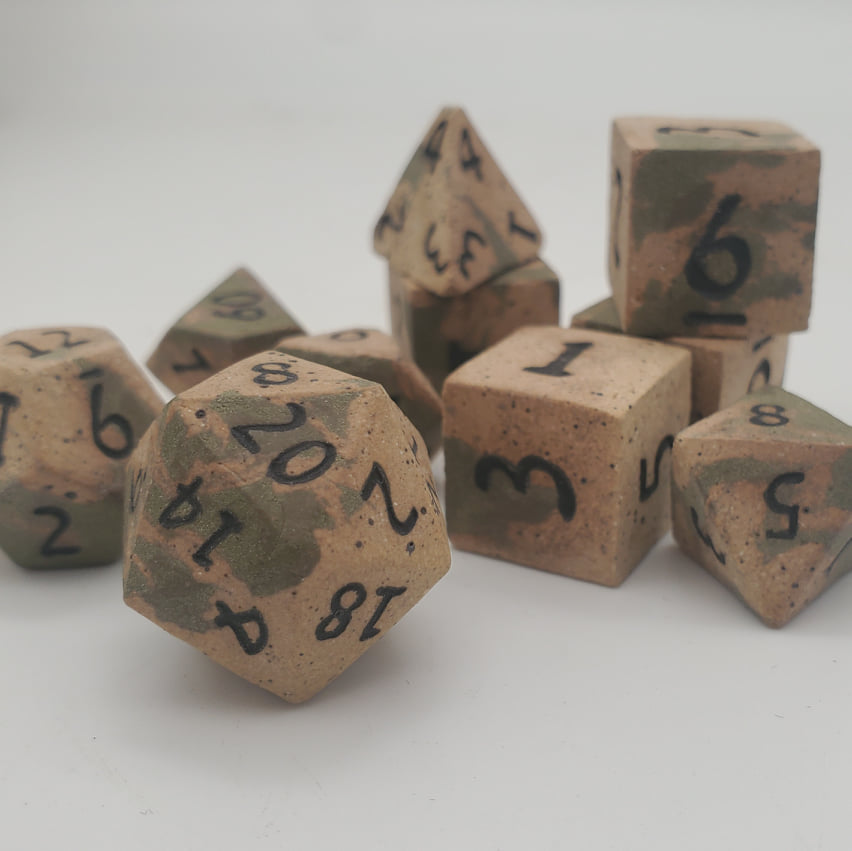
For dice, ranger players want earthy, outdoor-feeling sets, nothing urban or polished. The Ancient Oasis set fits the wilderness wanderer, and the Moss Druid set lands for the rangers who lean deep-forest and primal. Dice that look like they’ve been carried a long way through rough country.
Choosing Your Ranger Conclave
Rangers choose their conclave at 3rd level, fundamentally shaping their combat role and exploration abilities. Your choice determines whether you excel at single-target burst damage, managing multiple enemies, or commanding a loyal companion.
Damage-Focused Conclaves
Gloom Stalker dominates first-round combat with Dread Ambusher, granting an extra attack and movement on your first turn. This conclave excels in Underdark campaigns and any scenario where surprise rounds matter. The invisibility to darkvision creatures creates tactical advantages beyond pure damage.
Hunter offers the most customizable damage output through its build-your-own feature selection. Colossus Slayer adds consistent single-target damage, while Horde Breaker enables cleaving attacks against grouped enemies. Later features like Volley turn you into an area damage machine.
Horizon Walker specializes in planar threats with force damage and eventual teleportation abilities. The Planar Warrior feature converts weapon damage to force, bypassing most resistances. Best suited for campaigns with extraplanar themes or lots of resistant enemies.
Companion Conclaves
Beast Master receives significant improvements with Tasha’s optional Primal Companion feature. Your beast companion scales with proficiency bonus, uses your spell attack bonus, and doesn’t compete for your action economy. The original PHB version remains mechanically weak.
Drakewarden provides the strongest companion experience with a growing drake that eventually flies and breathes elemental damage. The companion scales excellently and offers both combat prowess and utility options.
Swarmkeeper commands a swarm of tiny creatures (insects, fey spirits, or similar) that enhance attacks with forced movement, damage, or mobility options. More versatile than traditional pet classes but less focused on a single companion bond.
Utility-Focused Conclaves
Fey Wanderer adds Charisma-based skills and charm abilities, making Rangers effective social characters without sacrificing combat effectiveness. The Otherworldly Glamour feature adds Charisma to Wisdom saves, solving a common Ranger weakness.
Monster Slayer specializes in identifying and countering specific creature types with Hunter’s Sense and Slayer’s Prey. Excellent for campaigns with recurring monster themes but can feel narrow in scope.
Best Ranger Builds
Gloom Stalker Burst Archer
This build maximizes first-round damage through Dread Ambusher and archery fighting style. Prioritize Dexterity first, then Wisdom for spell save DC and Perception. Take Sharpshooter at 4th level for damage scaling, then Fey Touched or Elven Accuracy depending on race. Use Hunter’s Mark sparingly—your burst turns often benefit more from other concentration spells or saving the bonus action.
Hunter Horde Breaker
Focus on Horde Breaker for additional attacks against multiple targets, scaling into Whirlwind Attack at 11th level. Dexterity remains primary, but consider melee builds with two-weapon fighting style. Great Weapon Master or Sharpshooter both work depending on your weapon choice. Spike Growth becomes crucial for battlefield control.
Drakewarden Companion Build
Balance personal effectiveness with companion support. Dexterity and Wisdom remain important, but your drake’s scaling means you can invest in utility feats earlier. Ritual Caster or Fey Touched provide excellent spell expansion. Your drake uses your spell attack bonus, making Wisdom particularly valuable.
Fey Wanderer Face
Unique among Rangers for effective social interaction. Start with high Dexterity and Wisdom, but don’t neglect Charisma since it powers several class features. Take Fey Touched early for additional enchantment options. This build works excellently in campaigns balancing combat with social encounters.
Ranger Tactics & Play Tips
Ranger tactics revolve around resource management and positioning. Your half-caster status means every spell slot matters, while your combat abilities require careful action economy planning.
Hunter’s Mark Economy
Hunter’s Mark competes with other concentration spells and costs your bonus action to cast and move between targets. Against single powerful enemies, the damage bonus often justifies the investment. Against multiple weaker enemies, consider Spike Growth or other area control instead. Remember that moving Hunter’s Mark requires your bonus action each time you switch targets.
Favored Foe vs Hunter’s Mark
Tasha’s Favored Foe doesn’t require concentration at higher levels and costs no spell slots, but deals less damage than Hunter’s Mark. Use Favored Foe when you need concentration for other spells or face multiple target encounters. The no-concentration benefit at 6th level makes it superior for maintaining other effects.
Positioning and Mobility
Rangers excel at controlling engagement range. Use Deft Explorer’s Cunning Action (if using Tasha’s rules) to Dash or Hide as a bonus action. Combine this with longbow range to stay at optimal distance. Pass Without Trace keeps your entire party mobile and stealthy.
Spell Selection Strategy
Prioritize spells that don’t require saves against your potentially modest Wisdom. Hunter’s Mark, Pass Without Trace, and Spike Growth offer consistent value. Absorb Elements provides excellent defensive utility. Conjure Animals at higher levels can overwhelm action economy.
Best Race Pairings for a Ranger
Variant Human/Custom Lineage
The bonus feat enables crucial early power spikes. Take Sharpshooter, Great Weapon Master, or Fey Touched at 1st level to establish your combat identity immediately. The skill proficiency helps cover Ranger’s limited skill selection.
Wood Elf
Perfect ability score increases, bonus weapon proficiencies including longbow, and Fey Step for tactical repositioning. The Perception proficiency stacks excellently with Ranger class features. Mask of the Wild provides additional stealth options in natural terrain.
Harengon
Rabbit Hop adds crucial battlefield mobility without using your action or concentration. The initiative bonus from Lucky Footwork helps ensure you act early in combat, maximizing burst potential for Gloom Stalkers. Proficiency in Perception rounds out the package.
Kalashtar
Telepathic Silent Speech enables coordination without breaking stealth, while Dual Mind provides advantage on Wisdom saves—crucial for maintaining concentration. The psychic resistance rarely matters, but the mental connection abilities support group tactics perfectly.
Frequently Asked Questions
Is Ranger underpowered?
The PHB Ranger has mechanical issues with Favored Enemy and Natural Explorer providing inconsistent benefits. However, Tasha’s optional class features significantly strengthen the class through Favored Foe and Deft Explorer. With these updates, Rangers perform competitively in most campaigns.
Best Ranger subclass?
Gloom Stalker offers the highest damage potential and consistent mechanical benefits regardless of campaign setting. For newer players or those wanting pet mechanics, Drakewarden provides straightforward power with companion management. Hunter remains solid for customizable builds.
Should I use Tasha’s optional rules?
Yes, absolutely. Favored Foe and Deft Explorer provide consistent, campaign-independent benefits compared to the situational PHB features. Most tables allow these optional rules because they clearly improve Ranger functionality without overpowering the class.
Best Ranger race?
Wood Elf provides the most synergistic combination of ability scores, weapon proficiencies, and utility features. Variant Human offers early feat access for power builds. Choose based on whether you prioritize optimization or thematic character concepts.
Is Beast Master good now?
With Tasha’s Primal Companion rules, Beast Master becomes viable by allowing companions to use your proficiency bonus and spell attack modifier while not consuming your action. The original PHB version remains weak due to action economy issues.
Hunter’s Mark — is it worth concentration?
Against single targets lasting multiple rounds, yes. Against groups of weaker enemies, Spike Growth or other area effects often provide better value. Consider opportunity cost—Hunter’s Mark prevents using other concentration spells that might solve tactical problems more effectively.
Is Ranger good for new players?
Rangers offer moderate complexity with clear combat roles and useful exploration abilities. The half-caster progression introduces spellcasting gradually. However, optimization requires understanding resource management and tactical positioning, making them better suited for players with some D&D experience.
Featured Ceramic Dice
Handmade ceramic dice sets from Ceramic Dice, picked to suit this class at the table.